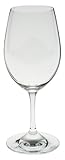
 Perfect for everyday use, the four white-wine glasses in this set are part of the moderately priced Ouverture series offered by world-renowned Austrian wineglass maker Riedel Crystal (founded in 1756). Being lead-free, they're not crystal like Riedel's premium glasses but are machine blown of potash glass and are dishwasher-safe. Their thin rims are cut and polished to Riedel's exacting standards, so wine flows easily onto the tongue. Each glass holds 9-7/8 ounces and stands 7-1/8 inches high. Though glasses shaped and sized for different types of wine seem commonplace today, when Riedel introduced this idea in 1961, it was revolutionary. Since then Riedel has continued fine-tuning glasses to bring out the best characteristics in wines and spirits. Varying bowls' shapes and sizes affects the position of the head when sipping and where wine first contacts the tongue's various taste zones. --Fred Brack
 List Price: $48.00
Amazon Price: $38.40
Customer Review: My favorite wine tasting glasses
I love the Riedel Ouverture series glasses and have the red wine, white wine and magnum sets. Only $8 per stem and the same shape as the much more expensive Vinum series. Supposedly, the no lead allows them to be put in the dishwasher, but I always hand wash them. Good light but strong wine glass with a nice length stem; many wine glasses have overly long stems. Don't know why more wine stores don't carry the Ouverture glasses. For me, they are the only ones to own.
Customer Review: For the smaller hand and more compact nose. . .
The Ouverture White glass holds 20% less wine than the red. It' a reminder to pour smaller portions of white so the wine doesn't warm up too quickly in the glass. I personally find the smaller size to be a bit too fussy, but one of my favorite tasting companions prefers this glass no matter what we're drinking. A great deal of your experience of wine comes from the aromas that develop in the air above the surface of the wine. A glass that forces the wine to have a large surface area for its volume and then narrows to concentrate the vapors will increase the flavor experience. Glasses with a thin lip seem to interfere less with the taste of wine than thicker (and cheaper) glasses. The shape of the glass makes a difference, too. Since we can only smell molecules that are in the air, the best wine-tasting glass is going to promote evaporation by exposing the largest possible surface area to the air. These glasses are wide at the waist and narrow at the top to get more from their wine. Do...


No comments:
Post a Comment